Seattle Neurology
  • Home
  • Blog
  • EBook
    • Migraine
    • Polyneuropathy
    • Low Back Pain
  • Resources
    • Conditions >
      • Aphasia
      • Brain Trauma
      • Brain Tumor
      • Dementia >
        • Alzheimer's Disease
        • Frontotemporal Dementia
        • Vascular Dementia
      • Diabetes
      • Dystonia
      • Epilepsy
      • Headaches
      • Hearing Loss
      • Low Back Pain
      • Multiple Sclerosis
      • Parkinson's Disease
      • Polyneuropathy
      • Postural Tremor
      • Sleep Disorder
      • Stroke
      • Vision Impairment
    • Geriatric Issues >
      • Agencies
      • Caregiving
      • End of Life
      • Independent Living Facility
      • Medical Supplies
      • Social Services
    • Other >
      • Disability
      • General Health
      • Pharmaceuticals
      • Rehabilitation

CASE STUDY #5

7/15/2013

0 Comments

 
This is a 50 y/o woman who suffered a traumatic injury of her left peroneal nerve and shortly thereafter developed heightened sensitivity to light touch over the top of her left foot accompanied by a patch of burning pain as if she had experienced a sunburn on top of her foot.  The skin on top of her foot turned red and felt warmer relative to the rest of her foot.  

Picture
DIAGNOSIS: RSD 

Reflex Sympathetic Dystrophy (RSD) can develop following trauma to a region of the body.  Typical situations would be a severe ankle sprain, shoulder dislocation or fractured bone.  It can also occur with a stretch injury of a peripheral nerve.  RSD is also known as Complex Regional Pain Syndrome I (CRPS I).  Symptoms of RSD include …

a) motor impairment: weakness and dystonia
b) sensory abnormalities: burning pain (dysesthesia), hypersensitivity to touch (allodynia)
c) autonomic deregulation
    i) vasomotor: swelling (edema), discoloration (erythema, pale), temperature (warm, cold)
    ii) sudomotor: sweaty or dry (hyper/hypohydrosis) 
d) trophic changes: thinning of skin, loss of hair, nails turn brittle

This is one of the reasons that clinicians try to control the pain early following a trauma so that the patient can maintain a normal level of physical activity and hopefully avoid unnecessary long-term complications such as RSD.
0 Comments

UNTREATED HEARING LOSS LINKED TO DEMENTIA

6/22/2013

0 Comments

 
There are 48 million (8% of the US population) who have some degree of hearing loss.  Almost 2/3 of all men who will ultimately lose their hearing will begin to do so as early as age 44.  Despite the large number of individuals with hearing loss, only 1 in 7 adults who could benefit from hearing aids actually use a hearing device.

Read More
0 Comments

VISITING HOMECARE AGENCIES

5/22/2013

0 Comments

 
There will come a time in our lives when due to an unexpected (or expected) circumstance we suddenly find ourselves or a loved one in need of help just to care for our basic needs.  If we are lucky, we may have a sibling, child or parent who lives nearby who can help out.  However, this may not be the situation for everyone and in that case hiring an agency to provide a visiting caretaker is an excellent option.  It is often less expensive then becoming a resident in an adult family home or skilled nursing facility and has the benefit of allowing you to remain in the comfort of your own surroundings.  

Read More
0 Comments

THE OBAMA HEALTH CARE REFORM LAW

4/29/2013

0 Comments

 
According to a survey performed by a New York based research firm called Commonwealth Fund, in 2012 there were 55 million US citizens (30%) without health insurance and another 30 million US citizens (16%) who were underinsured.  Underinsured being defined as having a plan that offered too little coverage while exposing them to high out of pocket cost. 

Read More
0 Comments

CASE STUDY #4

3/13/2013

0 Comments

 
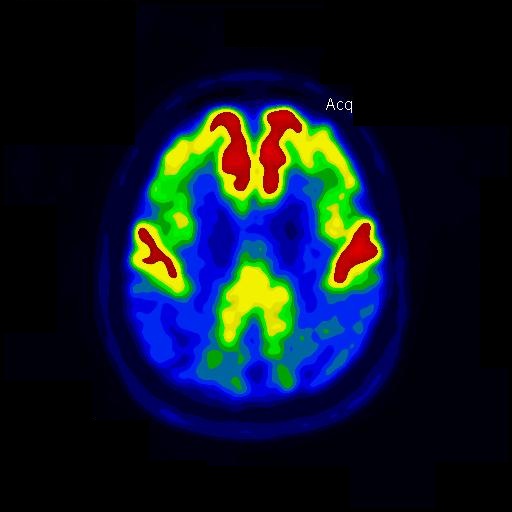
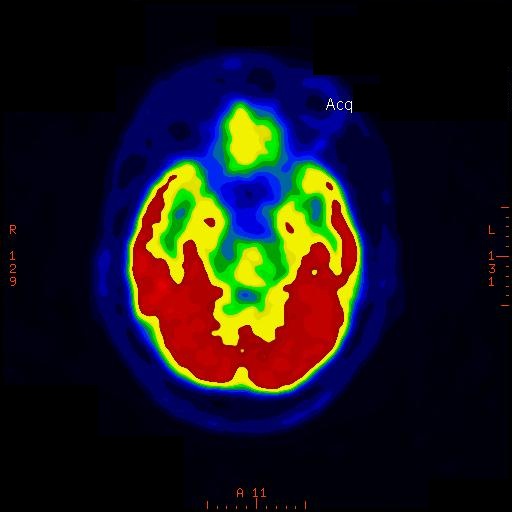
This is a 59 year-old man with a 4 year history of worsening short-term memory and difficulty expressing himself.  On initial exam, he misspoke frequently and made a number of spelling errors when asked to write a sentence.  He could not draw a clock. He was unable to recall 3 words after a short delay. He scored an 18/30 on the Mini-mental exam.  An MRI of the brain was normal.


This PET CT scan shows diminished blood flow in the parietal and temporal lobes bilaterally along with decreased flow to the posterior cingulate gyrus.  This is typical for Alzheimer’s disease. 

PET CT
DIAGNOSIS: Alzheimer’s Disease
0 Comments

PET CT (positron emission topography) 

2/20/2013

0 Comments

 
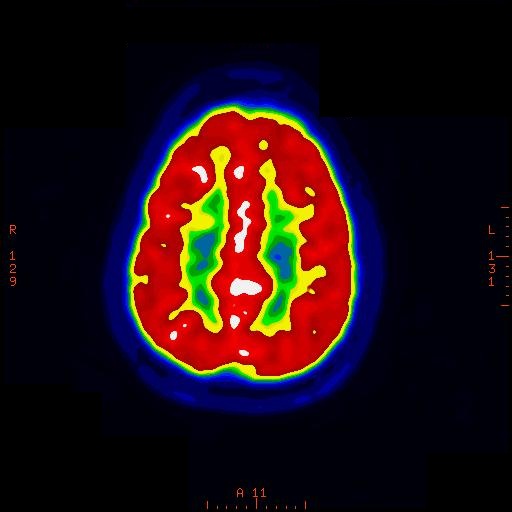
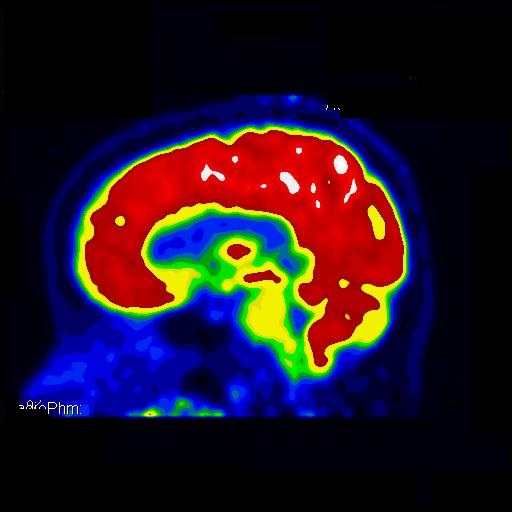
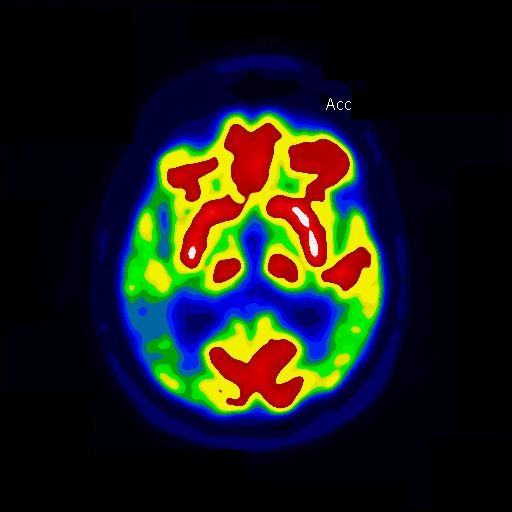
This is a specialized imaging test that is also known as a Cerebral Perfusion Study.  It uses a nuclear isotope to follow blood flow throughout the brain.  The patient is placed in a dark room with earplugs while the scan is performed (the goal is to not activate certain regions of the brain with external stimuli such as a light and sound which would then result in additional blood flow to those parts of the brain.  This would contaminate the study).  After the study, the computer assigns colors to the various velocities of blood flow: fast – red, medium – yellow, slow – green, no flow – blue.  If there are no neurons in a certain region of brain then there will be little to no blood flow.  Physicians can indirectly draw conclusions about the presence of an underlying destructive process in the brain when there’s a region of focal absence of blood flow.  For example after a large stroke affecting the right frontal lobe, the PET CT would be expected to show red color flow everywhere except the right frontal lobe which would be blue. 

This is an example of a NORMAL PET CT scan.  There is red coloring found along the surface of the brain indicating healthy blood flow to the underlying grey matter (neurons).  The center of the brain has two large fluid filled chambers that contain cerebrospinal fluid (CSF).  There is no blood flow to this region of the brain and therefore it appears blue in color.  The underlying white matter (myelinated axons) which transport impulses from one neuron to another neuron appear green and yellow in color.  They are green and yellow because they require very little blood flow to function.

PET CT
0 Comments

CASE STUDY #3

1/14/2013

0 Comments

 
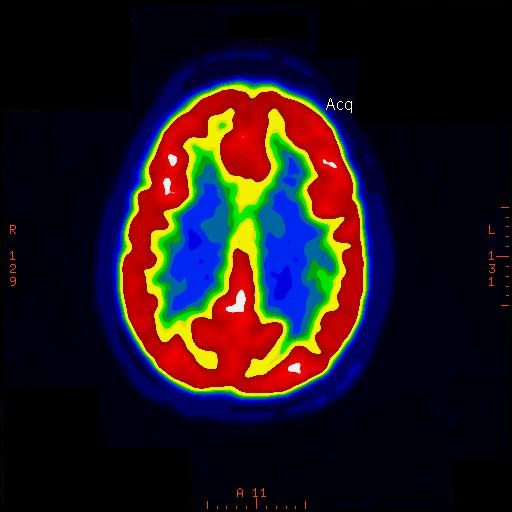
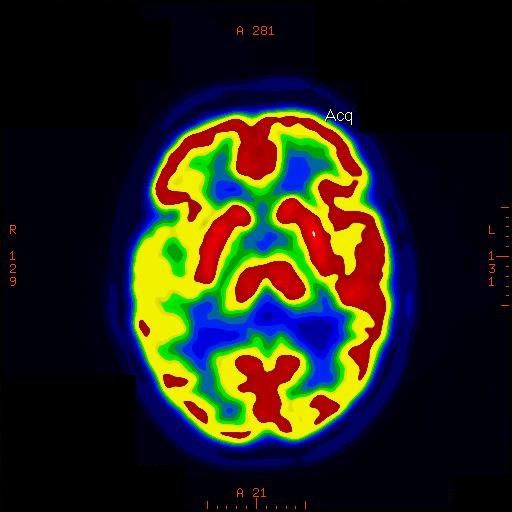
This is a 77 y/o retired woman with worsening problems expressing herself.  She also cannot troubleshoot how to fix her answering machine, drives slower than traffic and is forgetful.  On exam, she cannot recall 3 words after a short delay.  Her speech is halting and sub-fluent making it difficult for her to articulate her thoughts.   She cannot describe major news events.  She substitutes pronouns and vague terms such as 'that tool used to open the cans with' instead of 'can opener'.  The score on the mini-mental is 25/30 when two years earlier it has been 29/30.  An MRI of the brain performed two years earlier revealed signs of small-vessel disease which had been the result of years of untreated high blood pressure but no other abnormalities. 

This PET CT study demonstrates a focal region of decreased blood flow to only the posterior portion of the left hemisphere.  This fits with the vascular distribution for one of the major cerebral arteries.  This woman suffered an embolic stroke at some point since her prior MRI of the brain. 

PET CT
DIAGNOSIS: Left MCA Stroke 
0 Comments

CASE STUDY #2

12/12/2012

0 Comments

 
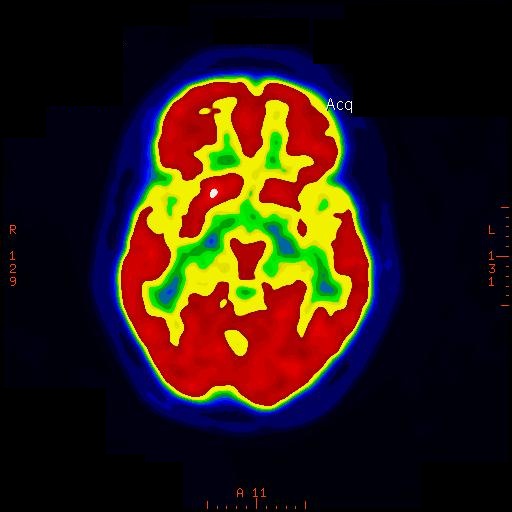
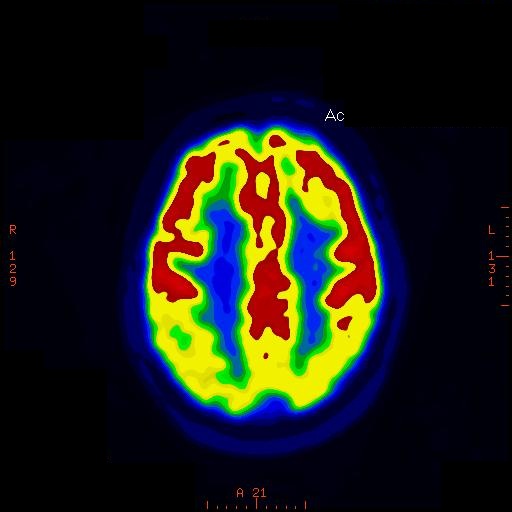
This is a 51 year-old woman who started having difficulty with her short-term memory at age 41.  She would frequently forget the names of people she met.  During the past five years, her husband has noticed that she repeats herself frequently – often asking the same questions.  On initial exam, there were no glaring abnormalities other than she could not repeat a list of 3 words that had been given to her to remember.  An MRI of the brain was normal. 

This PET CT study shows decreased blood flow to both hemispheres in the regions of the parietal and temporal lobes (right more than left).  This pattern is seen in early Alzheimer’s disease.


PET CT
DIAGNOSIS: Alzheimer’s Disease
0 Comments

VISIT TO THE EMERGENCY DEPARTMENT

11/1/2012

0 Comments

 
If you’ve ever visited an Emergency Department lately, you’ll be floored when you get the bill.
The 200 mg tablet of ibuprofen will cost you $8.  The same care is often much cheaper at an Urgent Care center.  The reason the cost  is so high is because the ED is located in the hospital.  Everything
is about twice as expensive if it happens in the hospital.  

Read More
0 Comments

PESTICIDES

10/6/2012

0 Comments

 
In 2007, over 5 billion pounds of synthetic pesticides were sprayed, dusted, or coated on crops worldwide (EPA). The US uses 22% of the worldwide pesticides (about 1 billion pounds) to produce 4.3% of the world’s agricultural output. Each year, physicians diagnose 10,000 to 20,000 cases of poisoning among the 2 million farm workers in the US. 

Read More
0 Comments
<<Previous
Forward>>

    Categories

    All
    Body Systems
    Book Review
    Case Study
    Dementia
    Diagnosis
    Elderly
    General Health
    Healthcare
    Helpful Tips
    Mental Health
    Migraines
    Parkinson's

    Archives

    May 2014
    April 2014
    March 2014
    February 2014
    January 2014
    December 2013
    November 2013
    October 2013
    September 2013
    August 2013
    July 2013
    June 2013
    May 2013
    April 2013
    March 2013
    February 2013
    January 2013
    December 2012
    November 2012
    October 2012
    September 2012
    August 2012
    July 2012
    June 2012
    May 2012
    April 2012
    March 2012
    February 2012
    January 2012
    October 2011
    September 2011
    May 2011
    April 2011
    March 2011
    February 2011
    January 2011
    December 2010
    November 2010
    October 2010
    September 2010
    August 2010
    July 2010
    June 2010
    May 2010
    April 2010
    March 2010
    February 2010
    January 2010
    December 2009
    November 2009

    RSS Feed

Powered by Create your own unique website with customizable templates.